Seamless Rose Flower Pattern Redwork: A Designer's Review
As an embroidery designer who spends most weekends behind a booth at craft fairs, I have learned to judge a digital embroidery file the way a baker judges a recipe before the first batch goes in the oven. I review every machine embroidery design for three things: will it catch a customer's eye, will it sew out cleanly in production, and will it hold up on a real product that someone wants to carry home. I recently spent time with the Seamless Rose Flower Pattern Redwork, and I want to share what I found before you turn it into your next craft fair product.
First Impressions and Booth Presence
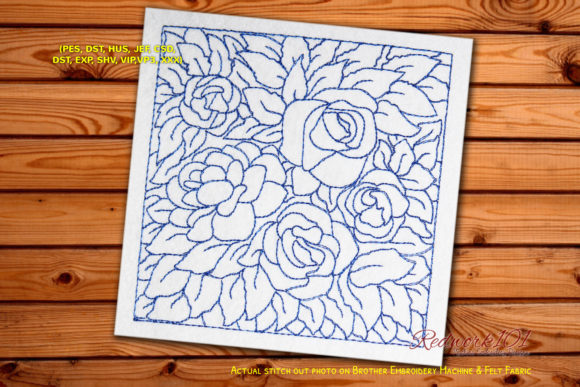
Right away, the Seamless Rose Flower Pattern Redwork carries a romantic, vintage mood that sits perfectly in the farmhouse and cottagecore aesthetic so many handmade shoppers love. The redwork style gives it a classic, almost heirloom quality. It feels soft and elegant without being fussy, and it has a decorative charm that reads as premium rather than casual. At a craft fair booth, this design would catch the eye of a customer looking for something timeless, something that feels handmade in the best sense of the word. The seamless nature of the pattern means you can use it as a border, a fill, or a repeating accent, and that versatility is a huge advantage for a small shop product. Whether you embroider it across the front of a tote bag or as a delicate band on a tea towel, the Seamless Rose Flower Pattern Redwork creates a cohesive, polished look that elevates the entire product.
Putting the Design to Work on Real Products
I tested the Seamless Rose Flower Pattern Redwork across several product categories that dominate handmade markets. On a tote bag design, the pattern works beautifully as a horizontal band near the top or bottom, or as a centered panel that fills the front. The repeat nature of the pattern means you can scale it up or down depending on your hoop size, and it remains visually balanced. For apron embroidery, the pattern looks lovely on the bib or waistband, and it adds a decorative touch without overwhelming the garment. Tea towel embroidery is where this design truly shines. The redwork color palette keeps it simple, and the floral motif feels right at home on kitchen linens. I also tested it as an embroidered patch, and the seamless repeat allowed me to cut perfectly aligned sections that could be sold as sets. On pillow covers and market bags, the pattern creates a soft, romantic focal point. Even on caps, where curved surfaces can distort a design, the Seamless Rose Flower Pattern Redwork held its shape well when I adjusted the placement to a flatter section of the crown.
What Makes This Design Sell at a Weekend Market
From a selling perspective, the Seamless Rose Flower Pattern Redwork has several strengths that matter to an Etsy seller or craft fair vendor. First, the design is easy to understand at a glance. A customer walking past your booth sees a rose pattern and instantly recognizes the floral motif. There is no confusion about what the product is or what it represents. That immediate recognition translates to faster buying decisions. Second, the pattern works equally well as a small accent design or a large focal element. This means you can offer multiple product variations without needing a new embroidery file for each one. One digital embroidery file can produce a whole line of finished products, which is excellent for batch production. Third, the design photographs well for online listings. The redwork style offers strong contrast against light fabrics, and the seamless repeat creates a clean, professional look in printable mockup images. For Etsy sellers who rely on photos, this is a real advantage. Fourth, the design feels repeatable. Because the pattern is seamless, you can embroider it on twenty tea towels in a row without worrying about alignment or centering issues. That consistency is crucial for commercial embroidery production.
Production Pitfalls to Watch For
No machine embroidery design is perfect straight out of the file, and the Seamless Rose Flower Pattern Redwork has a few areas that require careful attention. The stitch density in the rose petals can become heavy if the design is scaled too large. Redwork typically relies on outline and fill stitches, and if the density is too high, the fabric may pucker or the thread may break. I recommend testing the design on a scrap of your intended fabric before committing to a full production run. The tiny details in the rose centers and leaf veins can lose clarity at smaller sizes, especially on textured fabrics like tea towels or thick cotton. If you plan to embroider this design on a cap or curved surface, reduce the size slightly and check that the stitches lay flat without distortion. On dark fabric, the redwork thread may not stand out as well as it does on light backgrounds. Choose a thread color that offers good contrast, or consider using a white or cream thread for a different look. The box stitch mentioned in the product description is optional, and I recommend skipping it unless you are certain it adds value to your specific product. The outer box color is a separate element in most versions, and it can clutter the design if not used carefully.
Visual Appeal and Brand Consistency
The Seamless Rose Flower Pattern Redwork has a visual appeal that feels both decorative and approachable. It is not overly ornate, and it does not try to be funny or modern. Instead, it sits in a sweet spot of romantic, rustic, and elegant. For a handmade product, this design communicates quality and care. Customers at a craft fair often judge a product by how finished it looks, and the seamless repeat of this pattern gives a professional, cohesive appearance. If you are building a brand around farmhouse, vintage, or floral aesthetics, this design will reinforce that identity across your entire product line. From pillow covers to tote bags, the consistent use of the Seamless Rose Flower Pattern Redwork creates a recognizable booth display that draws repeat customers. The design also encourages engagement. Shoppers will stop to admire the stitching, ask about the pattern, and comment on the color choice. That conversation often leads to a sale.
Before You Thread the Needle
Before you load this embroidery file into your machine, run through a practical checklist. Test the Seamless Rose Flower Pattern Redwork on scrap fabric that matches your final product. Check thread contrast against at least three fabric colors. Review the spacing between repeats to ensure the pattern flows naturally. Confirm that your hoop size accommodates the design at your desired scale. Inspect the stitch density in the rose petals and adjust if needed. Use the right stabilizer for your fabric texture. For tea towels, a tear-away stabilizer works well. For tote bags, a cut-away stabilizer provides better support. Create at least one real mockup of your finished product before you list it online or bring it to a market. Compare the design on different fabric colors to see which one makes the pattern pop. And finally, confirm the commercial licensing terms for the Seamless Rose Flower Pattern Redwork before you sell any finished products. Some digital embroidery files require a commercial license, and it is better to know that upfront than to deal with issues later.
The Seamless Rose Flower Pattern Redwork is a strong addition to any craft fair seller's design assets. It offers versatility, visual appeal, and production reliability when handled with care. If you test it, adjust it, and pair it with the right products, this pattern can become a consistent seller in your handmade lineup. Whether you are an Etsy seller building a shop, a boutique maker preparing for a weekend market, or a creative entrepreneur looking for a reliable machine embroidery design, the Seamless Rose Flower Pattern Redwork deserves a close look.